Monday, 17 November 2014

What is/makes a thriller? #2

After researching the similarities of thrillers and conventions used throughout all thrillers I feel we are ready to apply this to our planning. We can now discuss the options we have for our thriller as we are aware of the conventions we must include for our final piece and have a clearer direction to follow through our planning.

One most significant discoveries through research is that thrillers are often hybrid-genres with another genre e.g. horror, action, adventure etc... Through knowing this we are able to take our planning in many different directions. However, to ensure we keep the project a hybrid-genre there are conventions of thrillers we must include for the final piece.

The plot often revolves around a main conflict which each character is involved with, directly or indirectly. This pulls the characters together creating multiple character arcs which help the audience to engage and sympathise for them. As a result the audience experiences more emotion which is by definition; the main focus of a thriller. In order to keep the opening thrilling suspense must be creating through varying the length of shots: long slow shots to build suspense followed by fast paced action shots to create a thrilling climatic arc to the story.


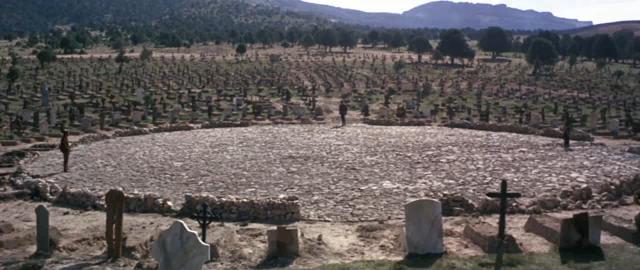
The conflicts featured in thrillers often contain a violent motive such as: kidnapping, ransom, a heist, crime or revenge. This fuels the film making it more exciting for the audience as well as giving opportunities for tones which are emotionally engaging. Moreover if a scene is well executed and the audience is made to empathise or feel good for a character affected by the violence then the event can be made extremely thrilling and engaging. However if there is no emotional engagement from the character to the audience then the violence may seem unnecessary; possibly disturbing the audience.

Monday, 10 November 2014

Group animatic

For a class project our group constructed a storyboard for the introduction of an opening to a horror thriller. The aim of this project was to see how the order of camera shots and change in narrative can effect the tone of the film:


We then decided to evaluate different parts of the project in a group in order to understand the ways in which narrative can affect an audience and how the film reacts when it's changed:

Sunday, 9 November 2014

Mis-en-scène

Through our lessons with Miss Brown we are understanding different conventions film-makers use in television and cinema. As a result, my group and I will have a much better understanding of the different factors which go into making our opening.

Mis-en-scene is everything that goes into a scene or frame, we can break this down into six elements to help us analyse them in more detail. These elements are:

- Settings and props.
- Costumes, hair and makeup.
- Facial expressions and body language.
- Lighting.
- Colour.
- Positioning of characters/objects within the frame.

Settings help create/build expectations for the audience; these can also establish a situation.

Costumes can establish a characters lifestyle/career.

Facial expressions can express a lot about that characters thoughts and feelings.

Lighting can draw the audiences attention to a particular character/object and give tone to the character, object or setting.

Different colours have many connotations that may be reflected in the situation or character.

Positioning of characters/objects often represents their authority in the shot, this can change throughout the scene as characters gain/lose power.

So far in this course I have found that understanding mis-en-scene is one of the most valuable and interesting lessons. Now, when watching a film, I can decipher how the film-maker has positioned items or people in the frame in order to express tone or represent a relationship between characters. Ultimately, this will help us when planning our shots and deciding what to include in each shot as using mis-en-scene is an easy and creative way of expressing something to the audience.

Camera angles


In one media lesson we looked more deeply into camera angles and how they're used in film and television. As well as being able to define different types of shot; I am now also able to interpret why a particular camera angle is used and how it effects the audience.

For example, the distance from a character/object the shot is taken has many connotations. Long-shots and extreme long-shots are often used to establish a setting or more than one character in a scene, where as medium-shots, close-ups and extreme close-ups enable the audience to focus on the character/object featured in the shot; this helps to signify the emotion and further meaning of the character.


The angle at which a shot is taken also reflects the tone that a character acquires. High-angles on a character allude that the character is below the audience, making them look smaller and therefore weaker or of lower authority. Opposing this are low-angles, the audience is then looking up towards a character connoting they are of high authority and power in the shot.


As well as just the angle and length of shots, the movement of shots is also very important. Tracking shots follow an object suggesting that the audience should pay attention to it as it's important. Similarly, ariel shots follow an object but from above the object.
Tilt shots feature a stationary camera that tilts to reveal an object. This helps signify the scale/perspective of something to the audience. Furthermore the 'reveal' part of the shot is often used to shock the audience as the object is shown. Much like tilt shots, pan shots are stationary cameras that move to reveal objects. However panning moves horizontally as oppose to vertically to create suspense or represent distance.


Monday, 3 November 2014

What is/makes a thriller? #1

What is a thriller?

A thriller, by definition, is a novel, play, or film with an exciting plot, typically involving crime or espionage.

Thrillers heavily stimulate the viewers moods through creating suspense and great anticipation; engaging the audience. Through creating a high amount of suspense, the film-maker can manipulate the audience to feel shocked, frightened or excited.

There are many sub genres such as: crime-thriller, action-thriller, sic-fi-thriller and horror-thrillers. This gives my group and I a lot of flexibility with the content we can shoot for our opening. However, we must ensure the conventions used throughout all the sub genres are used, ensuring our opening remains of the thriller genre. For this to happen we must use various conventions; so long as they create tension and suspense to thrill the audience.

What's included in a thriller?


Events are often repeated throughout different films in the 'thriller' genre, including: heists, kidnappings, revenge, ransom etc...
These events are often accompanied by similar plot-lines and characters. This allows for a safe guarantee that the film would be successful in having the same effects of a thriller.


The primary elements of a thriller:
  • The protagonist faces death, either his and/or her or somebody else's.
  • The force of the antagonist's must initially be cleverer and/or stronger than the protagonist's.
  • The main storyline for the protagonist is either a quest or a character that cannot be put down.
  • The main plotline focuses on a mystery that must be solved.
  • The film's narrative construction is dominated by the protagonist's point of view.
  • All action and characters must be credibly realistic or natural in their representation on screen.
  • The two major themes that underpin the thriller genre are the desire for justice and the morality of individuals.
  • One small, but significant, aspect of a thriller is the presence of innocence in what is seen as an essentially corrupt world.
  • The protagonist and antagonist may battle, themselves and each other, not just on a physical level, but on a mental one as well.
  • Either by accident or their own curiousness, each character is dragged into a dangerous conflict or situation that they are not prepared to resolve.

Monday, 13 October 2014

Binary opposites

Binary opposition is a theory that originated from two French theorists; Claude Levi-Strausse and Roland Barthes. The theory states that reality can inly exist in the form of ideas, and most importantly, everything comes from something else. For example, the reason we know what 'hot' is is only possible because we also know what 'cold' is. I do believe this theory as it is proven correct in all cases I can think of, especially in film. For example, a villain in a film is only unmoral because the audience know what moral is.


The theorists go on to explain how we, as humans, do this subconciously, that binary opposition is the basic way we learn to understand what things are. As a result all peoples understandings of all things are shaped and determined by knowing what other things are.

Monday, 22 September 2014

The Horror Cycle

In todays lesson we were introduced to how the impact of social and psychological forces in films affect society and the audiences feelings. The idea that the Horror genre is in a cycle suggests that the horror genre is now repetitive and continuous, however it has not always been this way:

In the 1930's horror genre in films was initially formed through films such as 'Nosferatu' and 'Frankenstein'. Most horrors in the 1930's through to the 1940's included a Monster and a very similar narrative, which would eventually become repetitive and boring to an audience; desensitising the audience. . Therefore in the 1950's films introduced aliens to horror films; creating the irrational fear that monsters could come from outer space as well as just the outside world.

Eventually this genre became repetitive again forcing a new change in the genre of horror films, and this film came with the 1960 Alfred Hitchcock film: Psycho. Hitchcock redefined the whole horror genre in multiple ways through his revolutionary directing style. One of the most effective changes he made to the genre was setting the film in a simple house with a murderer who seemed harmless to most people. I can see how this change greatly impacted the industry as the irrational fear of being unsafe from certain things was now exaggerated dramatically; nowhere and nobody is safe. Audiences were left in fear and running out of the theatres when the movie was first released as before 'Psycho' no movie had ever been as horrifying. In addition the changes to characters and setting, Hitchcock played with desensitisation further by making subtle changes to things audiences were used to seeing in the real world. For example he sped up the fps of the clouds moving and filmed water moving anti-clockwise down the plug-hole; toying with the audiences comfort. As a result of these minor and major changes to the genre being so effective in cinemas, some devices used and the film as a whole is extremely iconic.


Moving onto the 1970's horror films began to feature gore a lot more, films like this were labelled as 'slashers'. Films such as 'Driller Killer' and 'Hitcher' were two of the original slashers. Further on in the 80's the 'Film Nightmare on Elms St.' took the idea of insecurity and danger into our dreams. This again had a huge impact on society as audiences were left in fear of going to sleep.

Finally this cycle was coming to an end through into the 90's as most areas that horror movies could venture had been explored already. Horror films made since the 90's until present are often recreated genres that have already been established, for example the 'Saw' series is a throwback to the slasher genre. The most significant evolution in the past 20 years of horror films is that 'teen-horrors' are much more popular. However these 'teen-horrors' often recycle a phase of horror films from the past, but appeal to a younger audience and aim to entertain the audience as oppose to put them in fear. By doing this I feel horrors made in the present are slightly mocking classic horrors.