Monday, 26 January 2015

180 degree rule research

The 180 degree rule is a rule used in most film-making to ensure shots appear fluid and continuous. It does this by featuring an imaginary axis between two characters, the camera stays on one side of this line. When the camera crosses the line it's called 'jumping the line' and if the 180 degree rule is broken by shooting on both sides it's called 'shooting in the round'. In order to avoid this, the camera must always stay on one side of the imaginary line for all shots filming the two characters/objects.


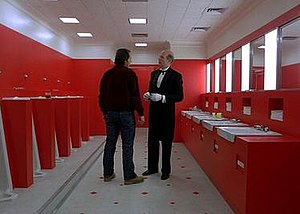
Although following the rule enables audiences to connect with movement in the background and visualise the scene more clearly, sometimes film-makers break the rule for good reason. This creates an effect of distortion to represent a scenario, environment or object. This is famously used multiple times in Stanley Kubrick's 'The Shining'.


Despite this, my group and I are unlikely to break this rule throughout our opening as we aim to keep the cuts smooth and consistent which means following the 180 degree rule. However, we will consider breaking this rule as we are presenting a disturbed character and environment in our opening scene.

Sunday, 25 January 2015

Final planning before storyboarding

Before storyboarding the final task, my group and I decided to discuss how we would implement the learning from the previous task into this one. One problem we encountered with the previous task was that our cam was often shaky when performing handheld and tracking shots. Therefore, we have agreed to use a dolly or tripod for the majority of the shots we take. After going over this with our teacher and reflecting on the mark scheme we decided this was a necessity as steady shots account for a large portion of the marks.

Moreover, this gave us further inspiration for the shots we had previously brainstormed. We adapted the plan to reduce the amount of handheld by using more steady shots and close-ups. Despite this, we can still edit the footage we take to look distorted and disturbed through editing or using canted angles. We then researched more ways to represent a disturbed character and setting, for example: colour-correcting shots, changing focus throughout shots, erie or sharp diegetic ambience etc...

As I am drawing and planning the storyboard along with help from Benoit, I have decided to do further research into camera angles and mis-en-scene. Before doing so, I drafted a storyboard with shots I could possibly use throughout the intro to signify that the character is disturbed in a dangerous environment. In doing so, I hope to have more inspiration when drawing out the final storyboard.

[Draft storyboard]

180 degree rule task

For help on planning our shots, my group and I have been given the task of planning, shooting and editing a clip with the following criteria:

[Criteria]

In order to succeed in this task our group first decided to plan out the shots we would take- scripting and dialogue was less important in this task as that was not what we were being evaluated on. We chose to use a variety of shots to build suspense in our clip as that would prepare us for the final task of making a thriller.

  1. (MS) Character #1 (Aayush) slowly walking towards the camera whilst on the phone.
  2. (ECU) Of the phone displaying a text message received by character #2 (Ashley) telling (Aayush) to meet him in the cafe.
  3. (Tracking Shot) tracking (Aayush's) movements from his location to the cafe, then meets (Ashley).
  4. (Pan) round (Aayush) to reveal character #2 sitting down as character #1 takes a seat opposite character #2.
  5. (MS) cut-in = Character #1 sits down. He begins to talk to character#2 
  6. (Over Shoulder Shot) shot over character #2's perspective as character#1 talks
  7. (MS) character #2 responds to the dialogue.
  8. (CU) character #1 expresses facial expression 
  9. (CU) character #1 clenches fist
  10. (MS) camera placed behind character #1 as he swings his arm to punch character #2.
  11. Over shoulder shot of character #2 as he reacts to the punch.

In addition to planning the shots, we also had to storyboard them to complete our planning for this task:


For our final piece the storyboard will be much more developed with more detailed pictures and more annotations as the dialogue and transitions will be more complex. We will also used more advanced filming equipment and an actual set rather than only filming in school.

Once we were happy with our planning we collected the equipment, we took a tripod as well as a camera to ensure we got steady-shots where we wanted them. The rest of the filming was fairly straight forward, however we made a few continuity errors when filming as the props in some shots were not included in others due to lack of proportion. As a result we had to re-film some mistakes we had noticed in editing. However, this also gave us a chance to re-shoot some shots that we thought could be improved or changed to give a different effect on the audience. As our main focus was continuity, we decided to replace the shots where the background changed at different angles, as the lack of continuity took away some immersion from the clips.

Furthermore, we decided to re-shoot a couple of shots featured which gave an unnecessary affect. For example, one zoom pan seemed particularly out place, as well as a tracking over the shoulder shot. By replacing these two shots with multiple still shots the final product resulted in being more continuous.

Here is our final piece for this task:

Wednesday, 17 December 2014

Winter Soldier opening analysis

After analysing 'Se7en' Benoit decided to analyse a more modern and generic action-thriller. Having watched he Winter Soldier before I can tell this film is much different to Se7en in terms of it's tone, narrative and effect on the audience due to it's difference in generic conventions. This is due to thrillers being a very broad genre with many alterations of hybrid genres, giving our group a lot of choice when we move forwards into planning.
Similarly to the opening of 'Se7en' the key conventions used have an affect of building suspense; suggesting this will be very important in the opening of our thriller. Therefore despite the narrative, sound, and tone being differing between each thriller, as the opening builds suspense it can be classed as a thrilling opening.

Opening Sequence analysis to "The Winter Solider"


"The Winter Solider" is a recent example of take on the hybrid thriller genre that incorporates both action and thriller conventions order to effectively execute a thrilling story of espionage  surrounding a super soldier working for a classified government agency is being hunted for treason.

The opening sequence to the film occurs during a search & rescue mission aboard a ship occupied by french pirates.
Directors Antony & Joe Russo boldly presented the audience with an introduction to the protagonist of the film whilst teasing the direction of the story whilst keeping the audience engaged and entertained throughout the duration of the sequence; effectively conveying its hybrid tones of action and suspense.    

The ways in which the film-makers achieves their inclusions on not only the thriller genre but on action and suspense which they emulated through various techniques.


Within the opening sequence, the film-makers built suspense by playing with both digetic and non-digetic sounds within the scene.
By adjusting digetic sounds such as footsteps by lowering the volume this allows the protagonist to seem as if he is sly and anonymous; it creates suspense due to the fact that the audience are witnessing the acts committed in the scene through the protagonist's perspective.


There by increasing the level of audio of the digetic sounds at a moment for example when the protagonist is in a conflict between the pirates, the sudden and thrilling impact of the physical punches or kicks are then emphasised a great deal due to the built up of anticipation and tension building to such a moment then plays a toll on the way in which the audience responses which is by being entertained whilst being thrilled at the stealth combat presented on screen.

In my opinion whilst watching this sequence it's most effective use of this technique of playing with digetic sounds was in the brief moment where the protagonist throws blade through a pirate's hand.
The various sounds of the blade flying through the air and its moment on impact were detailed and empathised due to the great deal of silence delivered by the minimal use of non-digetic sounds which ultimately helped exaggerate the harshness and shock of the blade piercing through the pirate's hand.


The ways in which the film-makers presented the action within the sequence is by primarily using medium shots in order to provide the audience with a close view to the harsh and brutal actions being committed which is enforced through the use of quick cuts from shot to shot as a way of emphasising the fast pace of both the sequence and of the fast movements of the protagonist whilst establishing his slick and stealthy manner.


This opening sequence was ultimately effective in regards to providing the audience with teases towards the directions to where the story may be heading whilst driving the audience's attention through thrilling action sequences in order for them to remain engaged; which the directors achieved through clever techniques which I have in fact noticed and realised it's effect towards the representation of the scenes.
Overall this opening sequence was a creative take on the hybrid thriller genre infusing both thriller with action.

Se7en opening analysis


For part of our group research we were given the task of analysing the opening to multiple thrillers. Benoit took up this task and we began to discuss which films he would analyse. We decided on the film 'Se7en' due to it's definite 'thriller' genre and bold & unique opening. After reading Benoit's analysis and watching the opening and film for myself, I decided that the colouring and cinematography was very impressive. I would like to repeat this convention of keeping the colour pallet to a minimum in our opening along with low-key lighting. Comments on the editing and sound also offer conventions our group might use to create a more suspenseful and thrilling opening.
Overall, these analysis's have offered a great deal of understanding and opportunity to our group, with multiple ideas that we are most likely to repeat in the making of our opening.


Opening Sequence analysis to "Seven"


As I have commenced my duty in regards to gathering research and for-filling my task ; I have explicitly chosen to analysis the opening title sequence to a film that practically defined the thriller genre to this generation of cinephiles "Seven" is my first piece of research.


A film that is directed by David Fincher; a film-maker who has truly mastered the craft of shaping a thriller that perfectly embodies conventions expected from the genre such as building suspense and tension through both visual imagery and sound that reflect the emotions and characteristics the story acquires in order to embody the form of thriller that the director intended which is in fact a "crime thriller".

The opening to the film has been stylised to be in the form of a title sequence that contains various frames displaying graphic and disturbing imagery ultimately making for an effective opening sequence to a film of the thriller genre.


The title sequence is remarkable in the way in which it captivates and engages the audience's attention through the effective visuals within the sequence with the inclusion of none-diegetic sounds that really help play as a benefactor in regards to teasing a dark and gritty yet thrilling story.

The non-digetic sound included within the sequence beautifully blends with the visuals casted besides the musical track due to the profound nature of the music bestowing this eerie and sinister vibe towards the sequence causing the audience to perceive from the tone emitting from the visuals but primarily supported with the soundtrack; this film will indeed be have very dark and unsettling story that will of course thrill you beyond your expectation. The music achieves this through the use of metallic sounds which are produced by the consistent sound of the high-hat of a bass drum in in addition to the digitally created sounds in order to create a feeling of distortion and insanity.


The way in which the director has chosen to shoot these images is effective due to the nature and meaning conveyed by the symbolism within the frame; primarily is due to the fact that most of the shots are framed with an "extreme close up" of a particular object which in addition the film-maker has enhanced the audience's focus on the images presented to them by playing with the depth of field of the shot. The effects of this technique is to draw the audience's attention away from anything within the sequence that my deprive them of their attention towards the shot but to focus their attention on a certain object such as the book in the shot within the sequence. This tests the audience's ability to depict meaning and symbolism from the object in order for them to retrieve information in regards to the story; ultimately testing and preparing the audience for the psychological and thrilling story awaiting to be told after the opening title sequence has introduced valued and insightful information in regards to how in fact the director may choose to tell his story. Another way in which the editor has contributed to the concept is through the editing and pacing of the sequence; due to the vast pace of the sequence causing the audience to witness brief but memorable glimpses of these disturbing contents allowing the audience to not only further test their ability to remember details that may be need within the story but to justify that the overall tone and feel of the film's story will rely the gritty and dark nature of the crime. 

The gritty and dark nature of the story is also teased in the opening of the film through the cinematography of the sequence.
Through the inclusion of few dark colours connotes the idea of discomfort and evil due to the murky look in which the film-makers has delivered to the audience. This was important to note due to the idea that audiences naturally infer indexical meanings associate with colours depicted from the shot. Therefore this was intriguing to me simply because it established that they're many aspect of within the frame must be planned thoroughly in order to ensure that the audience are not misinterpreting any aspects of the opening to our opening sequence.  


In regards to the way in which the director has chosen to consistently use "extreme close ups" for the entire sequence is remarkably compelling due to the ideas surrounding the use of this particular shot type and the impact it must have in relation to the audience's psychological response to this.


The way this shot type has been used throughout this opening sequence draws the allusion of a obscure form of intimacy due to the close proximity in which these shot are taken which may reflect the audience's feelings discomforted and uneasy about the detail they are able to witness from these disturbing images.

Ultimately this is an effective opening due to the fact that it achieves its purpose in regards to teasing the audience on what to expect from the story and convey the overall tone and ideas to later further elaborate throughout the duration of the film.

The analysis of the opening of this film was very helpful in regards to my research due to the fact that it has informed me on technical aspects associated with the film-making process such as camera movement,framing,editing and sound must all be executed in the specific way in order to achieve the type of thriller you wish to deliver; overall this provided me with a insightful look in the many ways in which an opening to a film of the thriller genre can be executed. 

I look forward to analysing opening sequences to other films and understanding the ways in which those directors have chosen to execute their take on the thriller genre.

Laura Mulvey's 'male gaze' theory

Throughout both courses, I have found it beneficial to study how different social groups are presented through media. Therefore our work in Miss Brown's lesson on the study of social groups can cross over into our research because by featuring social groups we are also commenting on the whole group. Therefore we could wither follow or avoid generic conventions in order to change or follow the stereotypes of the groups we feature. Here I took a look at the theory of the 'male gaze'; a theory which comments on gender and how it's represented in film-making.

Laura Mulvey was a theorist who studied and compared how both genders (male/female) are represented in society. She argued that men often think of themselves as the more dominant and important of the two genders. Most importantly, Mulvey constructed the theory that men aim to create a society where women are of a lower dominance and males are supreme.


After looking at many film clips from various film genres it was made clear that this theory does have strong proof. Most films featuring women represent them as more of a love interest or possession. To achieve this, directors commonly focus on the curves and sexual features of a woman with little action or responsability in achieving the re-equilibrium.


Mulvey's theory confirms this as she stated a womans role in a film is to:


  • To be an erotic object for the characters within the narrative to view.
  • As an erotic object for the audience to view.


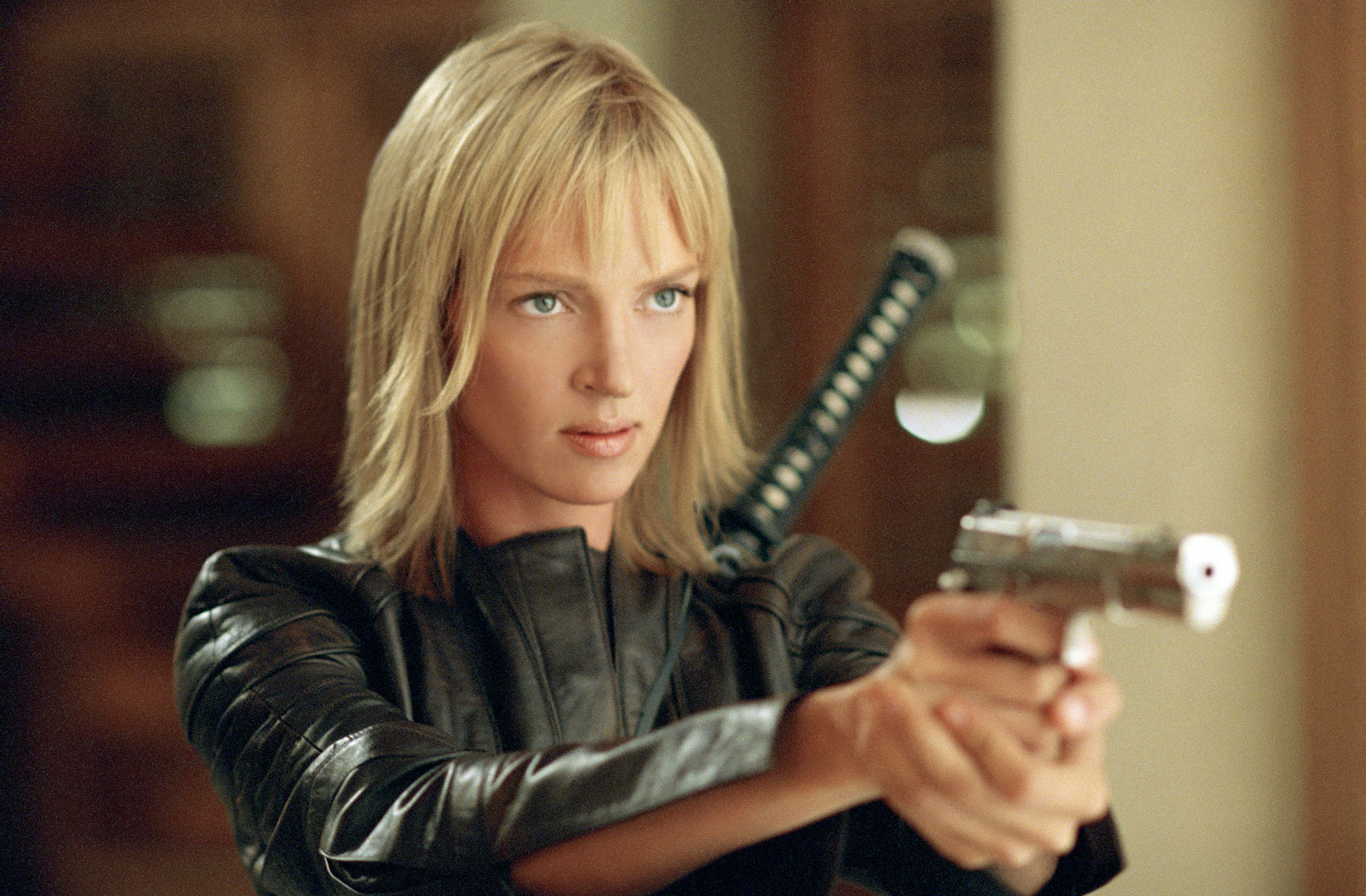
However, in some films a female is cast as the main protagonist, such as Kill Bill, where Uma Thurman plays an extremely dominant role - breaking some stereotypes Therefore the audience see her as more of a masculine character through the use of various conventions. Despite this, her character is treated like an object throughout the film to create realism in our society; even though she is not a typical woman, men continue to view her as weak. In effect, this only emphasises the directors point that women should not be treated as weaker or less dominant and that women are often misjudged in society.